
A clog is different from a slow drain: water stops moving entirely, or rises back up when you run another fixture. At that point plungers and store-bought snakes often compact the blockage further instead of removing it.
Clearing a clog properly means locating where it sits in the line and removing the material — then checking whether something like a sag, a root or a broken fitting caused it in the first place.
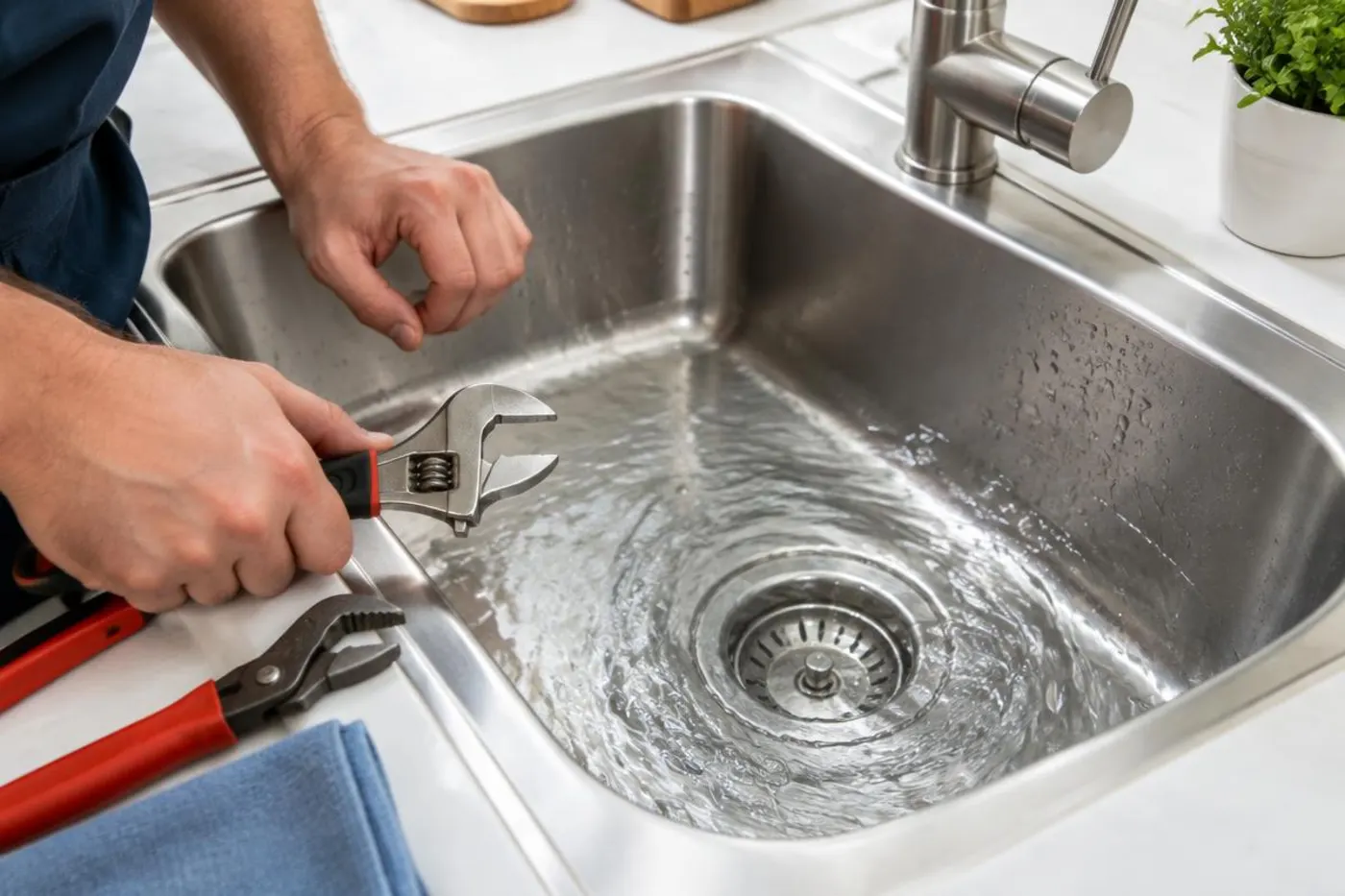
Common signs
- Standing water that won't go down
- Water backing up into a tub when a toilet or sink is used
- A plunger temporarily helps but the clog returns
- Bubbling or overflow at a floor drain
What usually causes it
Foreign objects
Toys, wipes, cotton swabs and dental floss commonly lodge at bends in the pipe.
Compacted debris
Repeated plunging of a grease or hair clog can pack it tighter further down the line.
Pipe defects
Offset joints and low spots catch debris and cause repeat clogs at the same location.
What to expect when you call
Tell us which drain is blocked and whether other fixtures are affected. A single fixture usually points to a local clog; several at once suggests a main-line issue.
Avoid pouring chemical cleaners into a fully blocked drain before we arrive — standing chemical water is hazardous to work with.
In Mississauga
In townhouse and semi-detached homes across Erin Mills and Meadowvale, a shared stack layout means one unit's clog can show up as a backup in a lower fixture. We'll help you figure out where the problem actually sits. See our Mississauga service area for more.